
Assistant Professor

Dr. Muhammad Omair

Biography

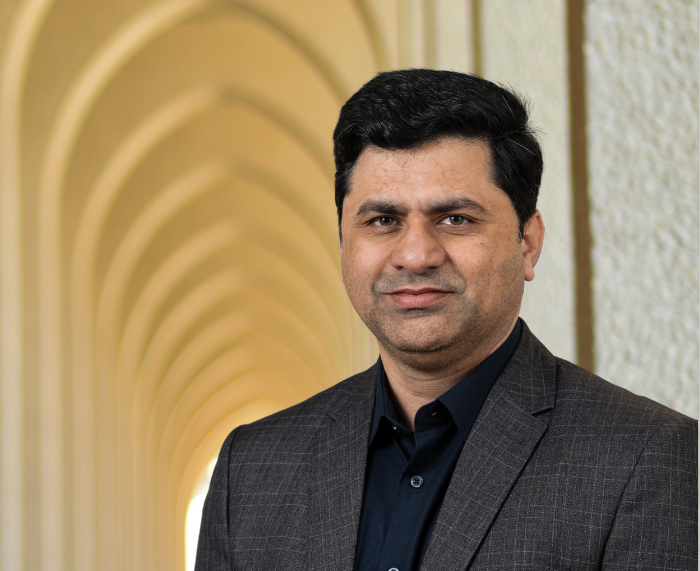
Dr. Muhammad Omair is an Assistant Professor in the Department of Information Systems and Operations Management at King Fahd University of Petroleum and Minerals (KFUPM), Saudi Arabia. He earned his PhD in Operations and Supply Chain Management from Hanyang University, South Korea, in 2019, and completed his postdoctoral research at Aalborg University, Denmark, in 2025. His academic and research expertise lies in Operations and Supply Chain Management, with a strong emphasis on sustainability and circular economy practices.
Dr. Omair’s current research focuses on circular economy business strategies, remanufacturing system design, sustainable supply chains, and resource-efficient operations management. His work aims to facilitate the transition from traditional linear production systems toward sustainable and closed-loop industrial ecosystems. He is particularly interested in developing analytical-based models that improve operational efficiency while supporting environmental sustainability objectives.

His research integrates quantitative modeling, decision-support systems, and sustainability-driven operational strategies to address contemporary challenges in manufacturing and supply chain systems. Dr. Omair has contributed to scholarly research through publications in reputable international journals and collaborations on projects related to sustainable operations, circular economy implementation, and industrial system optimization.

In addition to his research activities, he is actively engaged in teaching and mentoring in the areas of operations management, supply chain management, and business strategies. His interdisciplinary research continues to contribute to advancing sustainable industrial and supply chain practices aligned with emerging global sustainability goals.

Education

PhD Hanyang University, South Korea, Postdoc Aalborg University, Denmark


Specialization

Operations and Supply Chain Management

Selected Research


    1. Omair, M., Christensen, A., & Waehrens, B. V. (2025). Significant Factors and Challenges Affecting Remanufacturing Business Adoption at an Industrial Scale: A Systematic Review. Business Strategy and the Environment.
    2. Omair, M., Stingl, V., & Wæhrens, B. V. (2025). Circular economy of plastic: Revisiting material requirements planning practices for managing uncertain supply. Sustainability17(1), 112.
    3. Christensen, A., Stingl, V., Omair, M., & Wæhrens, B. V. (2025). Digital Product Passport in support of Data-Driven End-of-Use Strategies–a systems design perspective. Cleaner Environmental Systems, 100354.
    4. Khurshid, B., Maqsood, S., Habib, M. S., Omair, M., & Hwang, S. J. (2025). A hybrid evolution strategies algorithm for non-permutation flow shop scheduling problems. Scientific Reports15(1), 11856.
    5. Omair, M., & Wæhrens, B. V. (2024, July). Uncertain Supply of Recycled Plastic: Challenges and Mitigation Strategies for Adopting Plastic Circular Economy. In Proceedings of the 7th European Conference on Industrial Engineering and Operations Management, Augsburg, Germany(pp. 16-18).
    6. Habib, T., Omair, M., Habib, M. S., Zahir, M. Z., Khattak, S. B., Yook, S. J., … & Akhtar, R. (2023). Modular product architecture for sustainable flexible manufacturing in Industry 4.0: the case of 3D printer and electric toothbrush. Sustainability15(2), 910.
    7. Habib, M. S., Omair, M., Ramzan, M. B., Chaudhary, T. N., Farooq, M., & Sarkar, B. (2022). A robust possibilistic flexible programming approach toward a resilient and cost-efficient biodiesel supply chain network. Journal of Cleaner Production366, 132752.
    8. Ahmed, W., Jalees, M., Omair, M., Mukhtar, Z., & Imran, M. (2022). An inventory management for the global supply chain through reworking of defective items having a positive inventory level under a multi-trade-credit-period. Annals of Operations Research315(1), 1-28.
    9. Habib, M. S., Maqsood, M. H., Ahmed, N., Tayyab, M., & Omair, M. (2022). A multi-objective robust possibilistic programming approach for sustainable disaster waste management under disruptions and uncertainties. International journal of disaster risk reduction75, 102967.
    10. Omair, M., Noor, S., Tayyab, M., Maqsood, S., Ahmed, W., Sarkar, B., & Habib, M. S. (2021). The selection of sustainable suppliers by the development of a decision support framework based on the analytical hierarchical process and fuzzy inference system. International Journal of Fuzzy Systems23(7), 1986-2003.
    11. Ullah, M., Asghar, I., Zahid, M., Omair, M., AlArjani, A., & Sarkar, B. (2021). Ramifications of remanufacturing in a sustainable three-echelon closed-loop supply chain management for returnable products. Journal of Cleaner Production290, 125609.
    12. Alkahtani, M., Omair, M., Khalid, Q. S., Hussain, G., Ahmad, I., & Pruncu, C. (2021). A COVID-19 supply chain management strategy based on variable production under uncertain environmental conditions. International Journal of Environmental Research and Public Health18(4), 1662.
    13. Khurshid, B., Maqsood, S., Omair, M., Sarkar, B., Ahmad, I., & Muhammad, K. (2021). An improved evolution strategy hybridization with simulated annealing for permutation flow shop scheduling problems. IEEE Access9, 94505-94522.
We are using cookies to give you the best experience. You can find out more about which cookies we are using or switch them off in privacy settings.
AcceptPrivacy Settings