KFUPM Website | AACSB accredited since 2002
Professor

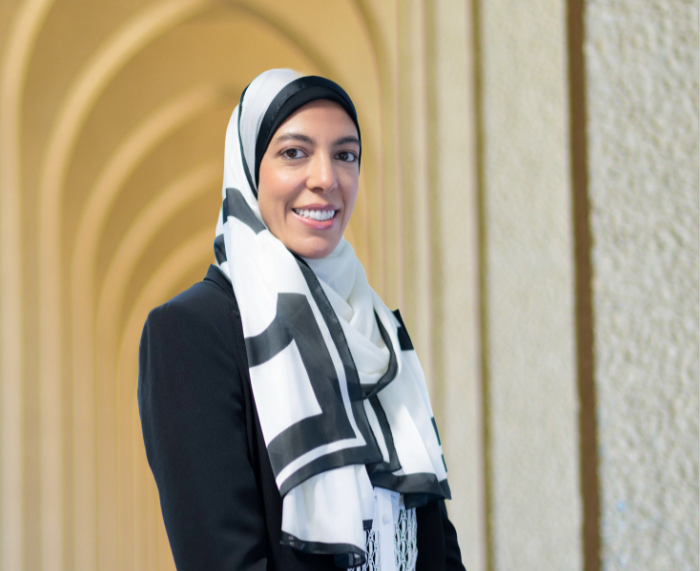
Dr. Marwa Elnahass

Biography

Professor Marwa Elnahass holds a PhD from Lancaster University (UK) Top 10 UK Universities. Prof. Elnahass has taken on the important roles as Chair of board of Studies, Ethics Director for the Business School and Promotion Committee member at Newcastle University (UK), a Russel Group University, as well as other leadership positions in internationally ranked institutions.

Professor Elnahass published over 40 studies in top ranked and impactful journals in Financial & Sustainability Reporting, Cybersecurity and Governance, Islamic/conventional Banking and FinTech (See Google_Index). She also wrote academic and policy-based books for Springer Nature and World Scientific Publishing. Her work has been recognized by esteemed associations such as the World Health Organization, British Government, the European Accounting Association, Chamber of Commerce (Türkiye), Qatar Central Bank, Supreme Council, Qatar and many others high authorities. Additionally, her achievements have gained recognition in various prestigious lists and awards. She has been featured in the Top 200 List of the Most Influential Women in Islamic Business and Finance since 2020 till today by Cambridge International Financial Advisory.

She is currently serving as guest editor as well as associate editor for several special issues in top-tier/ranked AJG academic journals, addressing interdisciplinary topics. In addition to her editorial roles, she also contributes as a panellist and a referee for UKRI, British Academy and international research councils, such as AHRC, ESRC, and QRDI.

Prof. Elnahass has been involved in policy-related projects with the British government see COP26_GOV.UK on Carbon Accounting for the ASEAN Region. This was followed by the COP27_POLCY paper and several policy and impact reports for united nations on carbon accounting and sustainability reporting. Professor Elnahass is frequently invited to participate in policy roundtables including British High Commission in Singapore and deliver keynote speeches in international policy and academic forums. She is also an advisory member for international networks such as the UK Universities Climate Network, FinTech UK, ASFAAG and act as a visiting fellow for several UK-based Russell Group Institutions.

With her extensive experience in attracting funds, she has demonstrated strong record in securing over £7 million for external/internal funding from various local, EU, and international research councils and centres. Examples include successful funding from QRDI, ESRC, EPSRC, NERC, British Academy, SSHRC and Qatar University. Prof. Elnahass also actively collaborates with industry partners in the, KSA, Qatar, Canada, and UK on impact (funded) projects, research, and joint Ph.D. supervision (e.g. Northumbria Water Limited, UK), fostering valuable industry partnerships and policy insights.

She is an experienced doctoral supervisor with a long track record of supervising interdisciplinary PhD research and serving as an external examiner for doctoral theses globally. With over 30 years of teaching experience, Prof. Elnahass has delivered a wide range of research-based, Executive MBA, accounting and finance modules across various programs and Higher Education institutions, both nationally and internationally recognised. She holds consistently high-students’ evaluation record for her teaching practices with several awards from business schools. In addition to her teaching and research responsibilities, she has served as Assistant Dean of research & graduate studies at UDST-Qatar. She has also played a key role in institutional and international accreditation activities. As a Panel Reviewer, she has led international accreditation assessments for business schools, including Turan University (Kazakhstan) and Beykent University (Türkiye). Furthermore, she has been a member of Newcastle University Business School’s accreditation teams for EQUIS (2018 and 2022) and AACSB (2019), contributing to the successful maintenance and enhancement of the school’s international accreditation standards. These roles reflect her strong commitment to academic excellence, quality assurance, and the continuous advancement of business education.

Education

Ph.D Lancaster University (UK)

Specialization

Financial & Sustainability Reporting

Climate Finance

Carbon Accounting

Corporate Governance 

Islamic & Conventional Banking

FinTech

Cybersecurity

Recent Research

(Published 40+ academic papers, 2 policy reports, 3 edited books, 1 book review, 1 technical article for ACCA, 1 industry-based article and several media blogs/news)

    • 2026: A Greenprint for Net Zero: The Future of Sustainability: Implications for the MENA Region. Springer Nature. https://link.springer.com/book/10.1007/978-981-92-1762-5
    • 2026: Industrial Waste Management and Climate Externalities: Implications for Corporate Financing. Journal of Environmental Management. https://doi.org/10.1016/j.jenvman.2026.130408 (ABS 3*, Q1, IF:9.2).
    • 2026: Rewiring finance for inclusion: Digital and traditional mechanisms in African banking. Emerging Markets Review, in press. https://doi.org/10.1016/j.ememar.2026.101448
    • 2026: From campus to boardroom: CEO education and its influence on corporate policies. Financial Innovation. In press/10.1186/s40854-025-00822-8
    • 2026: Guest editorial: Advancing sustainability: exploring innovations and challenges toward a greener future. Management & Sustainability: An Arab Review, https://doi.org/10.1108/MSAR-03-2026-386
    • 2025: Personal Traits of CEOs and Cybersecurity-Related Disclosure. Journal of International Accounting, Auditing and Taxation, (ABS 3*, Q1, IF:2.6) In Press.
    • 2025: From Trash to Treasure: The Moderating Role of Sustainability Governance Between Firm Strategy and Waste Management. Business Strategy and the Environment (ABS 3*, Q1, IF:13.4). https://doi.org/10.1002/bse.70409
    • 2025: The power of prestige: How CEO prestige shapes corporate cash strategies. International Review of Economics & Finance (ABS 2*, Q1, IF:2.8) Forthcoming. DOI: https://doi.org/10.1016/j.iref.2025.104735
    • 2025: Empowering Women to Lead Cybersecurity: The Effect of Female Executives on Disclosure Sentiment. International Journal of Finance and Economics. (ABS 3*, Q1, IF:2.8) Forthcoming. DOI: 10.1002/ijfe.3067. Top Cited paper (as evidenced and awarded by the journal for 2025-26).
    • 2025: Financial Shocks and Savings amongst Africa’s Middle Class: Insights from FinTech Data. International Review of Economics & Finance (ABS 2*, Q1, IF:2.8) Forthcoming. DOI: https://doi.org/10.1016/j.iref.2025.104414
    • 2025: Disruptive technology and audit risks: Evidence from FTSE 100 companies. Emerging Markets Review (ABS 2*, Q1, IF:4.8). In Press.
    • 2024: Being famous matters: Evidence from cash flow volatility. International Review of Financial Analysis, 93, 103165. (ABS 3*, Q1, IF:8.24). org/10.1016/j.irfa.2024.103165
    • 2024: A more sustainable future: Can politically connected CEOs spur the nexus between ESG performance and firm financial performance?. Journal of International Financial Markets, Institutions and Money (ABS 3*, Q1, IF:5.4). 2024, 96, 102056.
    • 2024: Corporate disclosures need a biodiversity outcome focus and regulatory backing to deliver global conservation goals, Conversation Letters. (Q1, IF: 8.5), Funded by NERC, UKRI. In Press
    • 2024: Women Directors’ Attributes and Demographics: New Insights into Bank Risk. Research in International Business and Finance (ABS 2*, Q1, IF:6.14). forthcoming.
    • 2024: Banking Resilience and Global Financial Stability. Academic (Edited) Book. World Scientific Publishing (January 2024). https://www.worldscientific.com/worldscibooks/10.1142/q0422#t=aboutBook
    • 2024: Banking Resilience: New insights on Corporate Governance, Sustainability and Digital Innovation. Academic (Edited) Book. World Scientific Publishing. https://www.worldscientific.com/worldscibooks/10.1142/q0421#t=aboutBook
    • 2024: Governance mediation in the era of disruptive technologies: unveiling new perspectives on the risk of material misstatements. (ABS 2*, Q1, IF:3.7) Journal of Financial Reporting and Accounting. org/10.1108/JFRA-11-2023-0643
    • 2023: A dynamic Framework to Align Company Climate Reporting and Action with Global Climate Targets. Business Strategy and the Environment (Funded by EPSRC, ABS 3*, Q1, IF:13.4). org/10.1002/bse.3635
    • 2023: Internal governance mechanisms and information value of banks. Journal of Accounting in Emerging Economies. (ABS 3*, Q2, IF:2.3). (in Press)
    • 2023: The Nexus among Board Diversity and Bank Stability: Implications from Gender, Nationality and Education.Emerging Markets Review. 57, 101071 (ABS 2*, Q1, IF:4.8).
    • 2023: Assessing the Environmental Impacts of Renewable Energy Sources: A Case Study on Air Pollution and Carbon Emissions in China. Journal of Environmental Management. Journal of Environmental Management. (ABS 3*, Q1, IF:8.6). 345, 118525.
    • 2023: Internal governance mechanisms and information value of banks. Journal of Accounting in Emerging Economies. (ABS 3*, Q2, IF:2.3). (in Press)
    • 2023: Social Capital, Trust, and Bank Tail Risk: The Value of ESG Rating and the Effects of Crisis Shocks. Journal of International Financial Markets, Institutions and Money (ABS 3*, Q1, IF:4), 83, 101740.
    • 2022: Drivers of Global Banking Stability in Times of Crisis: The Role of Corporate Social Responsibility. British Journal of Management (ABS 4*, Q1, IF:7.45). DOI: 10.1111/1467-8551.12631
    • 2022: Financial Accounting For Carbon Finance: A New Standard For A New Paradigm. Written for the Climate Conference – COP 27: COP27_POLCY.
    • 2022: Women Directors and Market Valuations: What are the “Wonder Women” Attributes in Banking?. Journal of International Financial Markets, Institutions and Money (ABS 3*, Q1, IF:4) DOI: 10.1016/j.intfin.2022.101611
    • 2022: Terrorist Attacks and Bank Financial Stability: Evidence from MENA Economies. Review of Quantitative Finance and Accounting (ABS 3*, Q2, IF:1.7). DOI: 10.1007/s11156-022-01043-1
    • 2022: Dividend Payout Strategies and Bank Survival Likelihood: A Cross-Country Analysis. International Review of Financial Analysis (ABS 3*, Q1, IF:8.24). DOI: 10.1016/j.irfa.2022.102129
    • 2022: Financial Stability: A ‘Vaccine’ for Tail Risk of the Global Banking Sector in the Shadow of the Pandemic. European Journal of Finance (ABS 3*, Q1, IF:2.5). In press
    • 2022: Earnings management and internal governance mechanisms: The role of religiosity. Research in International Business and Finance (ABS 2*, Q1, IF:6.14), DOI: 10.1016/j.ribaf.2021.101565
    • 2021: Global Banking Stability in the Shadow of COVID-19 Outbreak. Journal of International Financial Markets, Institutions and Money(ABS 3*, Q1, IF:4). This paper is among Top 8 papers, listed as hottest topics, citations and downloads by Science direct since May 2021. See: JIFMIM
    • 2021: Voluntary Carbon Markets in ASEAN: Challenges and Opportunities for Scaling Up. COP 26 Green Finance Report: UK. Published with the British High Commission in Singapore, Imperial College London, Green Finance Centre of Singapore and number of industry collaborations and UK Universities Network partners.
    • 2021: The Value Relevance of Bank Cash Holdings: The Moderating Effect of Board Busyness (ABS 3*, Q1, IF:4). Journal of International Financial Markets, Institutions and Money. Doi 10.1016/j.intfin.2021.101359
    • 2021: New Insights into Bank Asset Securitization: The Impact of Religiosity. Journal of Financial Stability (ABS 3*, Q2, IF:3.55). In Press. Doi: https://doi.org/10.1016/j.jfs.2021.100854
    • 2021: Board Busyness and New Insights into Alternative Bank Dividends Models. Review of Quantitative Finance and Accounting (ABS 3*, Q2, IF:1.7). 56(4), 1289-1328.